A Note To Parents: We make every effort for Roxanne's blog to be a SAFE site for children. Whenever possible, activities are in pdf format or link to safe sites for children. Please feel free to use the information in these posts for homeschool studies! All rights reserved by author and nature photographer, Virginia Parker Staat.

Sunday, July 16, 2023

When Smoke Gets in Your Eyes

View of Deen's Inlet from Blue Jay Lake, BC

When we reached Prince George, the smoke from the many wildfires in British Columbia was so thick, we could hardly see a football-field length in front of us. Weather reports rated the air as toxic. 

Smoke from BC wildfires near Prince George

Needing to catch our breath from all the driving, we decided to slow down for a day or two.  We also hoped the air would be clearer on the other side of Heckman Pass. So off to Bella Coola, we went. Thankfully, the air was, indeed, much clearer. 

Bella Coola is a small, Nuxalk First Nation town along the western coast of Canada, with just over 2,000 in population. Besides its beautiful scenery, Bella Coola is known for the “Hill” or Freedom Road. It is a steep, gravel road that connects the coastal town to the mainland. The Hill drops from Heckman Pass at about 5,000 feet to sea level in just over nine miles.  Parts of the road are only wide enough for a single vehicle. With hairpin turns and switchbacks, there are no guard rails. The crazy part about the road is the grade… in some places it can be as high as 18 percent.  Good brakes are absolutely essential!

Legend has it that the townspeople got tired of waiting for the government to build the road, so they took it upon themselves. With experts saying it was an impossible endeavor, they set a bulldozer on top and one at the bottom, each working until they met. In 1953, the road was opened. 

While David was in the Visitor Center, an elderly First Nation lady in a walker came by the truck, admiring Sam. She stopped to talk. Her name was Cindy. 

Cindy began to tell me her story. When I couldn’t understand her pronunciation, she explained that when she was young, a drunk beat her so badly and her jaw was so broken that her brother had to pull most of her teeth with pliers. She didn’t trust the dentist, so she drank until she couldn’t feel the pain.  Evidently she passed out during the first extraction. She only had seven teeth remaining. These encounters and stories people tell me touch me so deeply. I wish I could have spent hours learning more about her and how her life has turned out. Cindy left me to enjoy the music festival.  

At the visitor center, David learned the ferry was due to land in the afternoon.  Coupled with the small music festival scheduled for the weekend, accommodations were scarce and crowded. We found a place to camp the first night just out of town. The next morning we decided to leave the hustle and bustle and take the Clayton Falls Forest Service Road to Blue Jay Lake, about 14 miles south of Bella Coola, along Deen’s Inlet (off Whisky Bay). We had attempted the road during our last trip to Bella Coola in 2011, but we had a late start and turned around about midway. 

Road to Blue Jay Lake

The road to the lake was extremely rocky and rough, with deep ruts and many washouts. It took us three hours to go just over fourteen miles and gain 4,900 feet in elevation. The lake and view of Deen’s Inlet, however, made the trip worthwhile. 


David and Sam at Blue Jay Lake

We spent the afternoon letting Sam swim, taking walks, and soaking in the fresh, brisk air. 


Another early morning wake-up call by Sam put us on the road by seven. Onward we go, hoping to slow down once we get past the fires and on the Cassiar Highway.

Friday, July 14, 2023

Welcome to Our 2023 Trip

Meet Sam, our newest addition to the family.

Welcome to our travels!  It’s been five years since we visited Alaska. In 2019, we journeyed to Australia. Then the pandemic hit, and the Canadian border was closed. We are excited to be on our way north once again. 

We’re also breaking in our new traveling companion, Sam. Six years after losing our beloved Roxanne, we decided to open our hearts to another Golden. Samantha is not quite two years old and still a handful. Goldens are slow to mature, and Sam seems to be stretching the limits, but she’s ours. Hope springs eternal that she will soon settle from crazy dog to obedient. Hopefully this trip will be a positive for all. 

Summer came early to Texas. We broke 100 degrees in early June.  Normally those temperatures are not seen until July. As a result, we have been pushing hard to reach cooler climes. It has already been a journey. It has taken six days for us to reach the Canadian border.

We steered through the Fish Creek wild horses and Steen Mountain wild horse areas. But wild horses are elusive and take time to find. We decided to just mark their territories and move on, saving them for a later date. At least we did find five wild burros during our search. 


Wild burro near Fish Creek, Nevada

We have also felt like we were traveling through the plagues of Eqypt.  We drove through a Blood-red Mormon cricket invasion in Nevada. The road was so thick with the insects crawling over one another that you could actually hear their carcasses hit the undercarriage of the truck.  Our tire treads were full of their squished bodies… pretty disgusting. Some parts of the road were so thick with crickets that some drivers have reported hydroplaning on them. To give you an idea of how bad the invasion is, Nevada’s DOT has actually used snow plows to clear them from the road. (See a news report link at the bottom of the post.)

Blood-red Mormon Cricket

Then we ran into a grasshopper invasion in southern Oregon. We would run through waves of grasshoppers jumping, flying, and hopping across the road.  Sadly, many are still stuck in the truck's grill.
 
On we traveled. By the third morning, I was looking for my sweatshirt to ward off the chill… always a good sign. 

Sam is still adjusting to our travel schedule. And the time change!  She begins to whimper about five a.m., which is seven at home.  Hopefully she’ll get the idea soon. It’s comical to watch her in the truck as we drive long days. Like a toddler, she flops from one position to the next, with heavy sighs and lots of drama. We try to hike with her in the evenings or camp near water so she can swim. She seems to be getting the hang of it. 


I’ve been concerned about crossing into Canada after their long border closure. I am happy to report, however, that it was as easy as in the past… a few pertinent questions, and we were on our merry way. It’s so good to be back in this beautiful land. 

We invite you, once again, to join us on our adventure. Life is good, we are blessed, and can’t wait to see what happens next! 


Tuesday, June 27, 2017

First Day in Denali

Mount Denali
At Denali, we spent three days at the Teklanika campsite, and two days in the Savage River campsite. The sky was mostly clear for our whole stay there, and we even saw Denali three out of the five days! Did you know that only thirty percent of people that go to that national park get to see Denali?  This is because Denali creates its own ecosystem because of the snow evaporating, resulting in the mountain covering itself in clouds.

Morgan at the beginning of the eleven-hour bus ride
On our first day in the park, we decided to take the eleven-hour bus ride to Wonder Lake. We got the whole package with that decision, including bumpy roads and multiple sick and crying babies (for the whole eleven hours). But there were also amazing things I saw on that ride. Starting with the animals, the first one we saw was probably an Arctic Ground Squirrel. Those little things were everywhere, I would look one way and there would be two darting under the wheels of the bus and the next minute there would be one sitting on a bridge watching the bus drive by. I don't remember the order of the rest of the animals, but we spotted many Dall Sheep (those sheep are the reason that the park is here) and Bald Eagles.

Denali Caribou
Close to the third hour of riding on the bus I had seen three caribou -- one of them was even walking on the road in front of us for nearly a half mile which reminded my of the Polar Express movie getting stopped by caribou. Shortly after that, on the left side of the bus, was a herd of caribou running north to get away from he blistering hot forty-degree weather and to find some new grass to munch on.

When we were riding back to our Teklanika campsite, someone spotted a blonde grizzly bear on the right. I was at the front of the bus, so I looked towards the bear  through my binoculars and realized the bear was really just a bear-shaped rock. They have a lot of those in Denali. I mentioned it to the bus driver, and she started to move on until Mrs. Virginia snapped a picture and blew it up as much as possible which blurrily showed a mama bear's nose and eyes and her two cubs sleeping with her. Oops, I was wrong. We stopped to watch them for a little bit even though all you could see were blonde blobs from the distance we were at.

Grizzly bear and twin cubs
I think the animals were the best part of the bus ride but seeing Denali was awesome! Another part I really liked were the wildflowers that grew alongside the road. The bus driver (she was really nice) gave me a wildflower guide so that I could identify some of them. The most abundant and easy the spot were Shrubby Cinquefoil, Blue bells, Arnica, Wild Rose, and Eskimo Potato.

One animal that we didn't see on the bus was a moose. Which was interesting because coming into Denali, we saw a moose and her calf swimming in a pond and a mama moose with twins grazing on grass coming out of Denali. I guess moose don't like buses.

Saturday, June 24, 2017

Palmer Highland Games

Bagpiper at the Palmer Highland Games
    Liz and Walter are some of Mrs. Virginia and Mr. David's camping friends they met earlier in their trip. They decided to head up to Palmer for the Highland Games and the three of us voted and decided to tag along. This would be the Staat's first time seeing clans from Celtic countries compete for various events in skills such as strength, baking, and piping and drumming. I, however, went to a Highland Games two years ago back in North Carolina, but I was excited to see what they had in store for my second visit.

    We arrived a couple hours late because it started at eight am, when we were waking up. But luckily, most events hadn't started yet. The big, heavy men in kilts were in the field warming up with the weight for distance while the musicians with snare drums and bagpipes were tuning.


    We stopped to observe the tuning of the bagpipes until the competition of the men's weight for distance began. Basically, an 28(light hammer) or a 56 pound(heavy hammer) ball on a chain thrown from one hand, whoever throws the farthest wins. I thought that it looked funny because the wind-up to gain momentum consisted of many wacky twists and turns, but they could sure throw that thing far.

     While the men continued the weight for distance, women started the Scottish hammer. Throwing a 12 pound(light hammer) or a 16 pound(heavy hammer) ball on a stick- they competed for the place that could throw it the farthest.


Big guys at the Palmer Highland Games
     Many events went on like this but my two favorite strength events were the weight for height and the caber toss!  The weight for height is a weight(56 pounds) thrown, well, for height. At this Highland Games,you weren't allowed to use a spinning technique so the men had to stand still, throw a weight over their head, backwards, and over the bar. This event is also referred to as Weight Over the Bar, or WOB. Jody Potosky won that event reaching almost 19'6"!

   About halfway through the Highland Games, we decided we were going to get something to eat.  With many vendors to choose from, we settled on German food.  We had spatzel on a stick and schnitzel smothered in onions and cheese.  I thought it was funny that we were eating German food at the Highland Games.


Eating German food at the Scottish Games?
    I think the Caber Toss is just crazy (Mrs. Virginia thinks so too) -- especially considering how big and heavy the pole is. A caber is a little shorter than a telephone pole, and not as big around either, but just to get the idea, the athlete picks up the caber without any assistance, runs forward to gain momentum, stops, and throws. A successful throw includes the caber going end over end straight in front of the athlete. The judge decided how many points the person gets based on two things:

1. If the person flips it and,
2. The angle from how far away the caber from 12:00(straight foward) when it lands.

    Sometimes the case is that nobody can flip the caber and the judges get out a different, smaller or lighter caber, this is why there can be no world or country, but only field records, every caber is a different size.


Caber Toss
     Nearby the Tea Tent, were Celtic Dance Performances. An Irish dance academy with many girls were dancing to upbeat music and afterwards a group called the Midnight Sun Cloggers performed for us with many songs including an acapella piece. 

     The best music I heard all day though, were the bagpipes and snare drums. They had many band competitions and solos, which we unfortunately missed, but the opening of the ceremonies(before Caber Tossing and WOB)  was amazing. Every clan had their own band of pipes and percussion and then they joined together. They played Amazing Grace and Scotland the Brave before leaving us to enjoy the rest of the afternoon.


Friday, June 23, 2017

Morgan's First Post

My first airplane ride by myself!
Hello everyone, my name is Morgan and I'll be writing on Roxanne's blog for the next three and a half weeks.


My first view of Alaska from the airplane window.
My flight from North Carolina to Atlanta was my first time flying. It was really fun, until my next flight that day to Anchorage, Alaska which was eight hours long- and I changed time zones.


Me in the airplane's wheelchair. 
After what seemed like forever, the plane landed safely and I was welcomed by a wonderful greeting committee of two- Mrs. Virginia and Mr. David, who I will be camping with for about a month. I forgot to mention that I am still recovering from a broken ankle from a trampoline accident- hiking in a boot with crutches will be interesting, I will be walking in four days, I can't wait!


Me and part of my welcoming committee

Thursday, June 22, 2017

Exciting News!

Dear Friends,

A very dear friend of ours has volunteered to take over Roxanne's blog during the next several weeks. Morgan will be traveling with us in Alaska. She is 13 years old and a very talented writer. We hope you enjoy reading about her travels as much as we will enjoy traveling with her!  We invite you to join us for the adventure!

Roxanne... a Tribute

Roxanne (2001-2016)

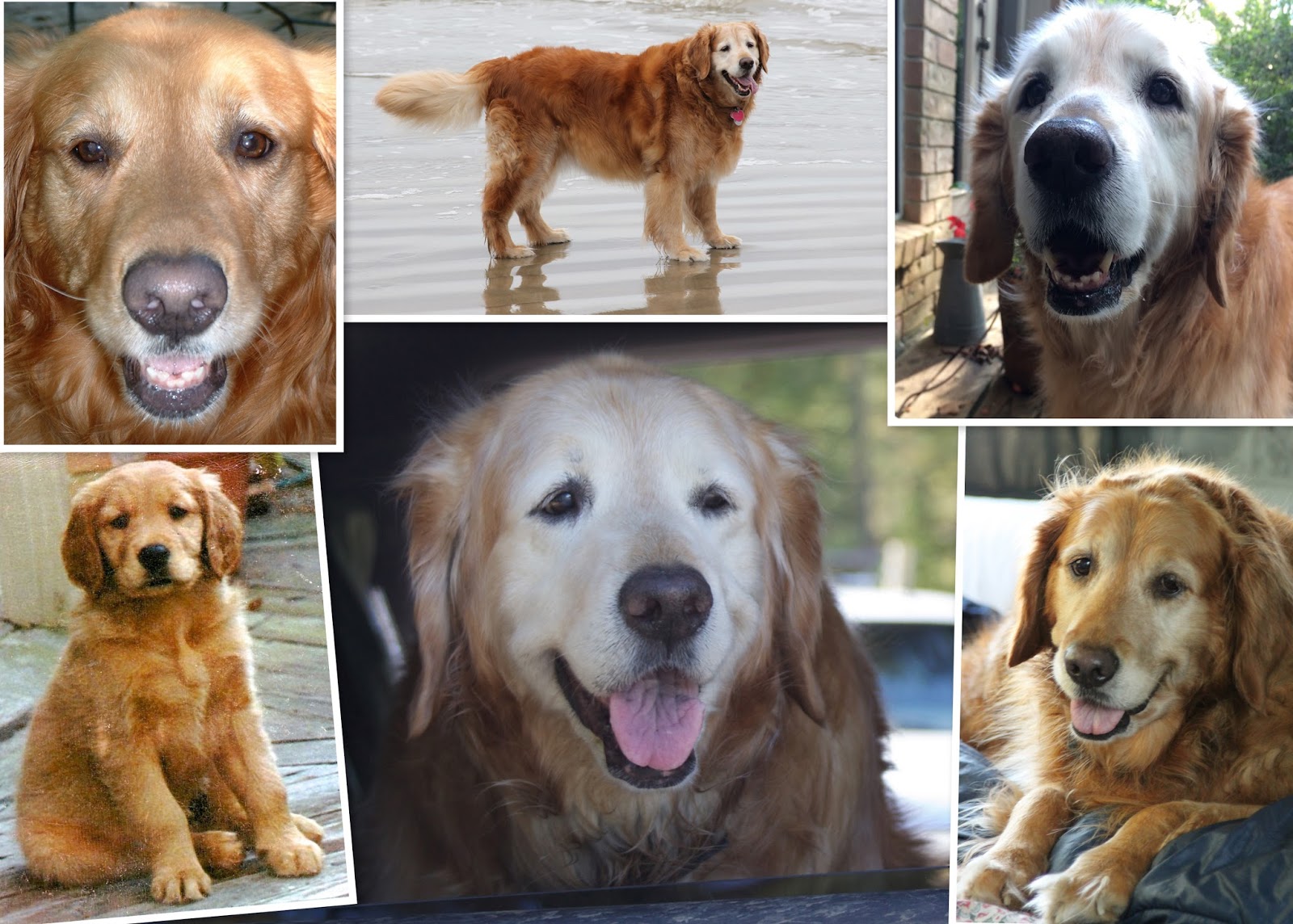
We called her the 98-pound Wonder... Circus Dog... Roxanne. She could yodel, hop through hoops, climb ladders, and make a six-foot vertical jump from a sit. She only chased golf balls. She crossed the Arctic Circle six times, traveled over 500,000 miles with us, and loved the smell of bison and bears. She thought horses were big dogs but could never figure out what a little dog was. She hiked hundreds of miles with us and loved to swim in freezing water. She had the courage of a lion. She rode in canoes, ferries, hay wagons,and elevators and laid at my feet at conferences, expos, and restaurants. She was a therapy dog, helping the sick, elderly, and foster youth. She was a Canine Good Citizen and too smart for her own good. She was the quintessential Golden, always loving, gentle, adaptable, and happy. For 14-1/2 years, she brought us love, service, loyalty, and joy... our Roxanne.

Roxanne

Dear Friends,

It has been some time since we posted on Roxanne's blog. We lost our beautiful Golden Girl last year, in May, 2016. Rox was nearly 15 years old. It has been such a sad time without her, but we know we will see her again in Heaven.

Rox's blog will continue. We will have guests to write posts, as well as us. One day we hope to have a new Golden to carry on the blog. Our next post will be a tribute to Roxanne. Then we'll share some exciting news. Thanks for joining us!

Saturday, April 5, 2014

The Amazing Honey Bee

Honey bees with pollen on their legs
Honey bees are truly amazing creatures.  They are called the most useful insect in the world.  One third of all the food that we eat is pollinated by honey bees.

Bees gather pollen.  They may visit as many as 50 to 100 flowers each trip.  In the process, they pollinate the flowers and help them to make more fruits and vegetables, like apples, oranges, almonds, and tomatoes. 

They also take nectar from flowers to feed their young.  Bees make honey from nectar.  It takes 5,000 flower visits for bees to make one teaspoon of honey. 

Here is what the inside of our beehive looks like...

Bee keepers raise bees to harvest honey and to pollinate crops.  During the summer, beekeepers take the extra honey that the bees make from the hive.  They cut off the waxy top from the honeycomb and drain the honey into jars.  When we harvest our honey, we'll tell you all about it!

Each beehive colony can have as many as 60,000 bees during the summer.  The colony needs as many bees as possible to gather honey for winter.  They must have at least 70 pounds of honey stored in their hive for the winter months.  Beekeepers must be careful not to take too much honey during harvest so that the bees will have plenty to eat when it is cold.

Bees have been mysteriously dying at an alarming rate over the past few years.  Scientists have become bee detectives to determine why the bees are dying.  If you would like to read more about bee detectives, check out this great book from your library:  The Hive Detectives:  Chronicle of a Honey Bee Catastrophe by Loree Griffin Burns.  

We found some fun activities to help you learn more about bees and honey.  Just click on one of these links:
If you would like to read more about our amazing honey bees, check out this book from your library:  The Life and Times of the Honeybee by Charles Micucci.

Thursday, April 3, 2014

Fun Bee Facts

Fun Facts about Bees
  • One third of all the food that we eat is pollinated by bees.
  • In a bee’s short lifetime, she flies the equivalent of one and one-half times around the circumference of the earth.
  • Bees can fly as fast as 15 miles per hour.
  • It takes 5,000 flower visits for bees to make one teaspoon of honey.
  • A bee can only sting once. When she stings, her stinger remains in her victim’s flesh. She dies shortly thereafter.
  • A queen bee can lay up to 3,000 eggs per day.

Friday, March 21, 2014

We are Bee Keepers!

Missy at the BeeWeaver Apiary
Today we went to an apiary near Navasota, Texas.  An apiary is a bee farm.  We bought a hive of bees for Opa and Omi's farm.  We will take care of the bees together.  When it is harvest time, we will share the extra honey that the bees make.

We loaded the bee hive in the back of our pickup.  When we arrived at the farm, we placed the bees on the platform in their new home.


Opa and David move the bees to their new home.
The next morning, we looked at each frame inside the beehive.  We wanted to make sure that the bees were healthy.  To keep from getting stung by the bees, we wore special hats with veils.  We wore thick clothes and put rubber bands around our wrists and ankles to keep the bees from crawling inside our clothing. 

David lights the bee smoker.
David smokes the bees.
We also lit a smoker.  Then we smoked the bees.  Bees send out an attack alarm from their tentacles.  The smoke keeps the bees from communicating with each other.  

Opa and David check each bee frame.
What a bee frame looks like...
We are happy to report that nobody got stung!


Missy checks out our new bee hive.
In our next post, we will tell you more about our amazing bees!


Monday, March 17, 2014

Nature Detective

Missy, the Nature Detective
We wanted to help Missy learn more about Texas animals, so we decided to have an adventure.  We became nature detectives!

We began looking for animal signs.  We took a walk and looked closely at the path.  Near a muddy bank, we saw deer tracks and raccoon tracks.  


We looked high and saw a squirrel’s nest.  We passed a pond and saw turtles sunning themselves. We found a bird feather.  We heard buzzing and discovered bees in the cherry laurel flowers.  


Have you ever become a nature detective?  Missy thought it was great fun!  

If you want to read more about being a nature detective, see our post here:   Roxanne's Nature Detective post

You can also check this great book out from your library: 
  • Animal Tracks and Signs:  Track over 40 Animals from Big Cats to Backyard Birds by Jinny Johnson.

Monday, March 10, 2014

What's Next for NASA?

Atlantis Space Shuttle courtesy NASA
It was a sad day for America when the space shuttles retired.  They were magnificent flying machines.  They were the first flying machines that went into orbit and returned to earth.  We learned so much when the space shuttles flew.

Now our wonderful space shuttles are in museums.  After 30 years of service, in July 2011, the last shuttle flight flew to the International Space Station.  The Atlantis space shuttle astronauts gave a flag to the crew on the International Space Station.  It was an American flag that flew on the first space shuttle.  It will return home on America's next spacecraft.  (To read more about the flag, just click here:  Star Spangled Banner in Space.)

When and what will be America's next spacecraft?  NASA is working on many different ways for America to get back into space, including the Orion spacecraft.

Orion will combine the best of the space shuttle and the Apollo moon mission spacecraft.  It will be able to supply the International Space Station or travel to Mars.  Orion will take astronauts deep into space and bring them safely back to earth.

Orion spacecraft courtesy NASA
Orion's first test mission is scheduled for September 2014.  NASA plans a four-hour test flight from Cape Canaveral in Florida.  One day, Orion flights may fly from Houston's Ellington field near Space Center Houston.  It will be exciting to see America back in space!!!


For more information about Orion, just click here:  Orion vehicle

Here's an Orion activity page for you:  Orion Activity Sheet

Here's a paper model of the Orion spacecraft that you can build:  Orion paper model

Here's a coloring page for the Orion spacecraft:  Orion coloring page

If you would like to build a paper space shuttle, just click here:  Space Shuttle Glider


Thursday, February 27, 2014

Astronaut Training

When we visited Space Center Houston, we saw the Johnson Space Center (JSC) astronaut training center.  Astronauts learn to do many things at JSC.  They learn to space walk, fly, and operate all of the equipment needed to live in space.

At JSC, the astronauts train in the world's largest swimming pool.  It is called the Neutral Buoyancy Lab.  The pool holds 6.2 million gallons of water.  It is more than two football fields long and 40 feet deep.  At the bottom of the pool, there is a true-to-life model of the International Space Station.  When the space shuttle was flying, they use to have a full size space shuttle model under the water.

To train in the pool, astronauts put on their spacesuits and swim underwater.  They learn to use equipment underwater.  They also practice space walks.  Astronauts train about ten hours under water for every one hour that they spend walking in space.

Neutral Buoyancy Lab and Mock-up International Space Station.  Photo courtesy NASA.
There is also a true-to-life model of the International Space Station on the ground.  Astronauts can learn everything about the International Space Station here.

International Space Station full size model.  Photo courtesy NASA. 
Before astronauts go into space, they must train for over 300 hours at JSC.  To learn more about the Johnson Space Center's training facilities, click here:
JSC Space Training

Did you ever want to be an astronaut?  I wanted to be a Space Dog!  The first dog in space was named Laika.  If you would like to learn more about Laika and other animals in space, just click here:  Roxanne the Space Dog

Would you like to train like an astronaut?  We found two NASA videos just for you!


For more fun videos, you can click here to go to NASA's website but first please ask an adult if it's okay! Train Like an Astronaut

You can also check out these great books at your library:
  • Astronauts:  Training for Space (Countdown to Space) by Michael Cole
  • Career As An Astronaut:  What They Do, How to Become One, and What the Future Holds! by Brian Rogers
  • I Want to Be an Astronaut by Stephanie Maze

Monday, February 24, 2014

Johnson Space Center

Entrance to Lyndon B. Johnson Space Center
Today Missy visited the Lyndon B. Johnson Space Center (JSC for short).  JSC is part of the National Aeronautics and Space Administration (NASA).  NASA takes care of our nation's science and technology for air and space.

Missy at Rocket Park, Lyndon B. Johnson Space Center, Houston, Texas
The Johnson Space Center is home to Mission Control.  Since 1965, Mission Control has been at the center of our space explorations.  Mission control specialists take care of astronauts and their flying machines.  They make sure that the astronauts are safe and healthy.  They also watch over the International Space Station.  They want to know where it is and they want to make sure that it is safe and working as it should.

International Space Station Flight Control Room
International Space Station Map
JSC is also home to Space Center Houston.  Space Center Houston is the JSC Visitor's Center.  It has many attractions to help us learn more about space travel.

Entrance to Space Center Houston
While we were at Space Center Houston, we saw movies, took a tram tour, and learned about astronauts, how they live in space, and all about the rockets and spacecraft that they fly.  We also saw the astronaut training center.  Here are just a few photos that we took:

Astronaut Spacesuit
Apollo Capsule
Pretend Space Shuttle
Over the next few posts, we're going to talk about some of the things that we learned at the Johnson Space Center.  It was OUT OF THIS WORLD!!!

Missy in front of a test Apollo spacecraft
If you would like to read more about the Johnson Space Center, just check out this book from your library:  Bluebonnet at Johnson Space Center by Mary Brooke Casad